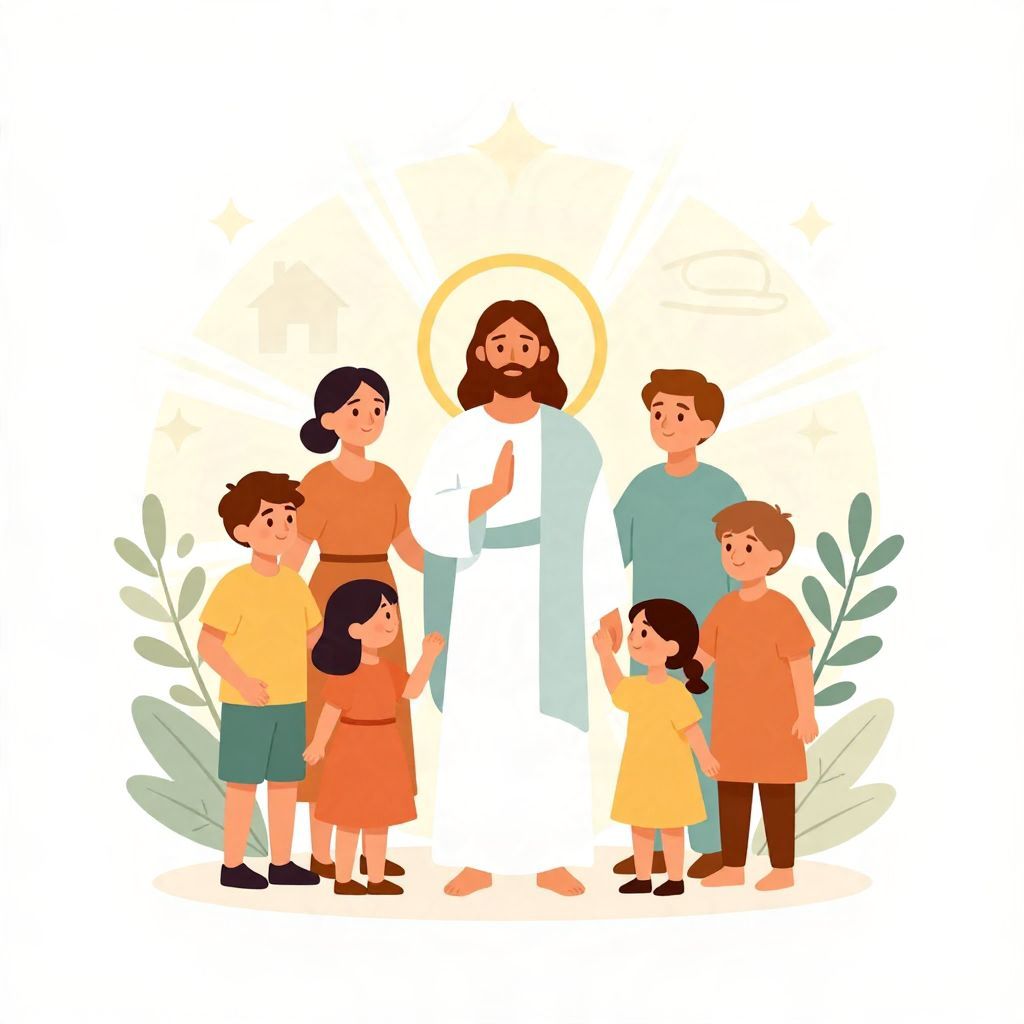
Have you ever wondered why the Gospels mention Jesus’ brothers and sisters, yet many Christians still ask how many siblings He had? The Bible gives a clear answer, and the answer matters because it helps readers handle Scripture with honesty and faith.
Jesus had four named brothers and at least two sisters, so He grew up in a large family in Nazareth. The Gospels name His brothers as James, Joseph, Simon, and Judas, and they mention sisters without giving their names. This truth helps readers read the Bible carefully and see how fully Jesus entered ordinary human life.
How Many Brothers and Sisters Did Jesus Have?
Jesus had four brothers and at least two sisters. Matthew 13:55-56 and Mark 6:3 name His brothers as James, Joseph, Simon, and Judas, then refer to His sisters in the plural. Scripture gives no number for the sisters, so the safest answer says He had at least six siblings in all.
What the Gospels Say
Matthew records the townspeople asking, “Isn’t this the carpenter’s son? Isn’t his mother’s name Mary, and aren’t his brothers James, Joseph, Simon and Judas?” Matthew 13:55-56 gives the clearest family list, and Mark 6:3 repeats the same names with the mention of sisters.
This matters more than a trivia question. The Bible roots Jesus in a real family, a real town, and a real human life, so no one can treat the incarnation like a spiritual costume change.
Why the Bible Mentions Them
Scripture does not mention Jesus’ siblings to satisfy curiosity alone. It shows that Jesus lived among ordinary family relationships, with all the joys, tensions, and responsibilities that fill a home.
Have you ever noticed how often God works through ordinary settings? He chose Nazareth, a carpenter’s home, and a family that knew daily life, not a palace with polished floors and perfect manners.
Who Were Jesus’ Brothers?
The New Testament names four brothers: James, Joseph, Simon, and Judas. These names appear in Matthew 13:55 and Mark 6:3, and the Bible later shows that at least two of them became important figures in the early church.
James
James stands out because he later became a leader in Jerusalem. Galatians 1:19 calls him “the Lord’s brother,” and Acts 15 shows him helping guide the church with wisdom and seriousness.
James’ life reminds readers that closeness to Jesus in the home did not save him by itself. He still needed faith, repentance, and the risen Christ, just like every other sinner.
Judas, Not the Traitor
Matthew and Mark name a brother called Judas, often identified with the author of the letter of Jude. Jude 1:1 calls him “a servant of Jesus Christ and a brother of James,” and that humble title says a great deal.
He did not lean on family status. He called himself a servant, which shows the proper response to Jesus, even for someone who grew up in the same house.
Joseph and Simon
The Bible gives no detailed story for Joseph and Simon, yet their names matter. Scripture often records names without long biographies, and that silence teaches readers that God sees every life, even the ones that never make headlines.
That truth lands gently and firmly. Some people in every church never get a platform, yet the Lord knows their names, their prayers, and their faithfulness.
Did Jesus Have Sisters Too?
Yes, Jesus had sisters, though Scripture does not name them. Matthew 13:56 and Mark 6:3 speak of His sisters in the plural, so Jesus had at least two sisters and possibly more.
Why the Number Stays Unnamed
The Bible often gives enough detail to establish truth without feeding endless speculation. Here, the plural form tells readers what they need to know, and the silence keeps the focus on Christ rather than on family trivia.
That restraint feels almost refreshing, doesn’t it? Scripture does not behave like a gossip column with a halo.
What This Means for Christian Readers
The mention of sisters reminds readers that Jesus entered a normal household, not a staged religious scene. He knew the daily rhythms of family life, and He honored the Father in the middle of them.
This truth gives comfort to believers who live in complicated homes. Jesus understands family pressure, sibling tension, and the quiet work of faith inside ordinary walls.
Did Mary Have Other Children?
Many Christians read these passages and conclude that Mary and Joseph had other children after Jesus’ birth. The plain reading of Matthew 13:55-56, Mark 6:3, and related passages supports that view, since the text calls these people Jesus’ brothers and sisters in a natural family sense.
Why Christians Disagree
Some Christians read “brothers” as cousins or close relatives, often from a desire to protect Mary’s perpetual virginity. That view has a long history in parts of the church, yet the simplest reading of the Gospel text points to actual siblings.
Readers should handle that difference with grace and honesty. Christians can disagree on this point and still agree that Jesus alone saves, Jesus alone reigns, and Jesus alone deserves worship.
What the Text Most Naturally Says
The New Testament uses ordinary family language in a straightforward way. If the writers had meant cousins, they could have said so, yet they chose the common words for brothers and sisters.
That plain speech matters. God speaks clearly enough for humble readers, and He does not hide truth behind a spiritual treasure hunt.
Why Jesus’ Family Matters for Faith
Jesus’ siblings prove that He entered real human life without losing His divine identity. He did not float above family life like a distant saint; He lived in it, and He honored the Father through it.
Jesus Knows Family Life
Hebrews 4:15 says Jesus sympathizes with our weaknesses, and His family life helps readers see why that matters. He knew the daily demands of shared meals, shared rooms, and shared responsibilities.
That truth comforts believers who feel unseen at home. The Son of God knows what it means to live under a roof with other people who do not always agree.
Jesus Redefines Family Around Obedience
In Matthew 12:48-50, Jesus points to those who do the will of His Father and calls them His family. He does not reject His earthly relatives; He shows that faith creates a deeper bond than blood alone.
That word reaches every believer. If you trust Christ, you belong to a family that stretches across every nation, every age, and every Sunday morning with weak coffee and strong hymns.
What This Teaches About Christian Living
The question of how many brothers and sisters Jesus had points to bigger truths about Scripture, humility, and family faith. The Bible invites readers to ask honest questions, read carefully, and submit to what God has said.
Three Practical Lessons
- Read the Gospels carefully. Matthew and Mark answer the question plainly, so let Scripture speak before tradition or assumption takes over.
- Honor ordinary faithfulness. Jesus grew up in a home, which means God values hidden obedience, family duties, and daily consistency.
- Trust Jesus as Lord, not merely as family member. His brothers needed faith, and every reader needs the same saving response.
These lessons keep the question from staying academic. They press the heart toward reverence, obedience, and a deeper love for the Word of God.
A Question for the Heart
Do you treat Scripture like a living voice, or do you only reach for it when a hard question appears? The answer shapes how you read the Gospels and how you respond to Christ.
God calls His people to read with humility. A humble reader receives even small details, since every true detail points back to the Lord who inspired it.
What to Hold Onto
Jesus had four brothers and at least two sisters, and the Gospels say so plainly. That fact confirms the reality of His human life, the truthfulness of Scripture, and the nearness of Christ to ordinary family experience.
Hold onto this truth: Jesus knows family life from the inside, yet He remains the holy Son of God who saves sinners and gathers them into His family. Pray for a heart that receives Scripture with trust, and ask the Lord to make your own home a place where His word receives honor.
For more faith-based topics and articles, explore prayer for my brother and prayer for my sister, where Scripture can guide your prayers for the people closest to you.