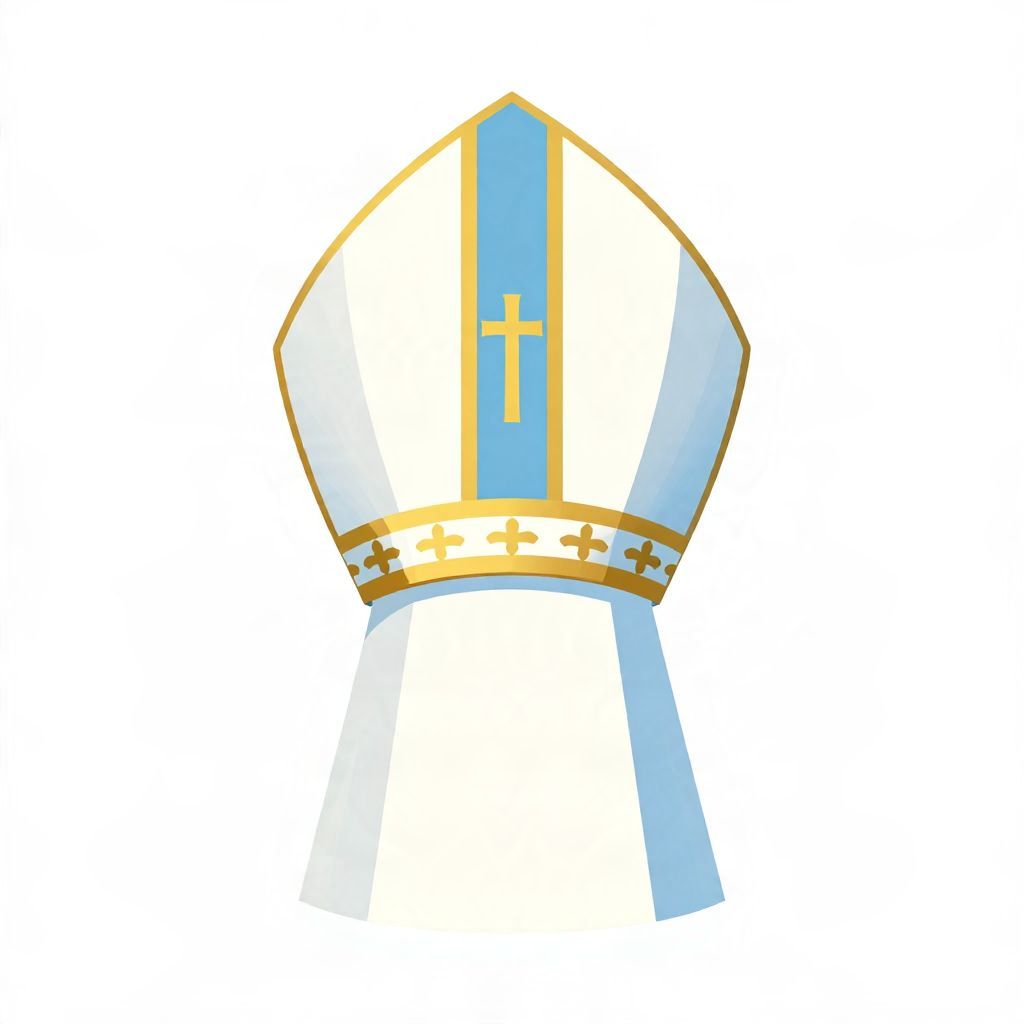
Have you ever seen a bishop’s tall ceremonial hat and wondered what it means? A miter is a liturgical headpiece worn by bishops in some Christian traditions, and it points to office, reverence, and service under God’s authority.
Its shape and history matter less than the truth it signals: church leaders must carry visible responsibility with humility, not pride. Scripture keeps that lesson sharp, from the shepherds of God’s people to the call to serve with clean hands and a faithful heart.
What is a Miter?
A miter is a ceremonial hat worn by bishops in some Christian churches to mark their office and public role in worship. It symbolizes authority under God, not personal status, and it reminds the church that leadership must point people to Christ, not to the leader.
The Miter in Christian Worship
The miter appears during formal worship, ordinations, and other sacred rites in traditions that keep historic episcopal leadership. It does not add holiness to the person wearing it; it simply marks the office the church recognizes.
That distinction matters. A bishop may wear a miter, but the hat never makes the bishop faithful, and the hat never makes the sermon true.
What the Miter Symbolizes
The miter often points to authority, teaching responsibility, and the call to guard the flock. In that sense, it echoes Scripture’s warning that leaders must watch over souls with seriousness, since God will hold them accountable.
Hebrews 13:17 reminds believers that leaders “keep watch over you as those who must give an account,” and that line strips away any glamour from church office. The miter can look impressive, yet the weight behind it should make any faithful leader tremble a little.
What Scripture Says About Spiritual Leadership
Scripture never treats leadership as a stage for self-importance. God calls leaders to serve, teach truth, protect the weak, and live in a way that matches the gospel they proclaim.
Authority Must Look Like Service
Jesus said that the rulers of the nations lord it over others, but His followers must not do that. He taught that greatness in His kingdom comes through service, and He proved it by washing feet.
Mark 10:42-45 cuts through every form of religious vanity. If a miter points to authority, Scripture tells that authority to kneel, listen, and serve.
God Cares More About Character Than Clothing
God told Samuel that He looks at the heart, not the outward appearance. That truth reaches straight into church life, where robes, miters, and titles can distract people from the weightier matters of faithfulness.
Do you see how easily the eye can drift to what shines? A polished hat can catch attention, but a holy life carries far more weight before God.
Why Some Churches Use a Miter
Some Christian traditions use a miter to show continuity with historic church practice and to mark the bishop’s responsibility in teaching, governing, and blessing. The practice can help worshipers remember that the church belongs to Christ and that no leader acts on private authority.
History and Symbolism
The miter developed over time in church history, and different traditions explain it in different ways. In many settings, it serves as a visible sign that the bishop stands under Scripture and serves the people of God.
That sign can help, yet symbols only help when they point in the right direction. A signpost that points nowhere only gives the traveler a headache and a longer walk.
What the Miter Cannot Do
A miter cannot forgive sin, make a person holy, or replace obedience. It cannot stand in for prayer, repentance, or a life shaped by the Word of God.
1 Samuel 16:7 reminds the church that the Lord sees the heart. That truth keeps every Christian tradition honest, since God never confuses ceremony with conversion.
What Believers Should Learn From the Miter
The miter can teach believers to respect order, honor faithful leadership, and remember that God appoints servants for the good of His people. It can also warn the church against confusing visible office with spiritual maturity.
Honor Leadership Without Idolizing It
Christians should respect leaders who preach the Word, guard doctrine, and care for souls. Yet respect never turns a leader into a little pope of the living room, and Scripture never gives any human being that kind of throne.
1 Peter 5:2-3 tells shepherds to serve willingly and not to lord it over those entrusted to them. That command protects the church from both abuse and flattery.
Watch Your Own Heart
The miter can also prompt a personal question: do you want visible honor more than hidden faithfulness? God often works most deeply in people who never receive applause, and He sees every quiet act of obedience.
Here the church learns a hard truth. God cares far more about a faithful servant than a flashy symbol, and He never misses either one.
How Christians Should Respond to Church Symbols
Christians should receive symbols like the miter with discernment, not superstition. A symbol can teach, but it cannot save, and it can point to truth only when the church keeps Scripture above tradition.
Use Symbols as Servants, Not Masters
Healthy symbols remind the church of biblical realities such as holiness, order, calling, and accountability. Unhealthy symbols steal attention from Christ and turn worship into pageantry without substance.
Ask a simple question: does this symbol help me worship God more clearly, or does it make me think more about people? That question can expose a lot in a hurry.
Hold Fast to the Gospel
The gospel does not depend on a miter, a robe, or a title. It depends on the finished work of Jesus Christ, who died for sinners, rose from the dead, and now rules His church with perfect wisdom.
Colossians 1:18 says that Christ is the head of the body, the church. That truth keeps every symbol in its place and every leader under the Lordship of Jesus.
Practical Ways to Think Biblically About the Miter
If you see a miter in a church setting, let it remind you of biblical leadership, not spiritual spectacle. Use the moment to think about holiness, service, and the kind of shepherd God wants for His people.
- Pray for leaders who carry public responsibility before God.
- Test teaching by Scripture, not by appearance or office.
- Honor faithful service more than outward display.
- Guard your heart against pride, both in leaders and in yourself.
- Keep Christ central in every symbol, ceremony, and sermon.
These steps keep the church steady. They also keep the miter from becoming a costume that distracts from the cross.
The Deeper Lesson Behind the Miter
The deepest lesson behind the miter is simple: God calls His people to visible faithfulness under His authority. Every Christian, whether bishop or layperson, must live before the Lord with reverence, humility, and obedience.
That truth reaches beyond church architecture and ceremonial clothing. It asks whether your life points to Christ in a way that others can see.
Micah 6:8 gives the shape of that life: do justice, love mercy, and walk humbly with your God. No miter can improve on that calling, and no Christian should settle for less.
Conclusion: What A Miter Really Means
A miter is a ceremonial headpiece worn by bishops in some Christian traditions, and it marks office, responsibility, and reverence. Scripture teaches that every form of leadership must stay humble, accountable, and centered on Christ.
Let the miter remind you that God values faithful service more than outward display. Pray for your leaders, test everything by Scripture, and ask the Lord to make your own heart steady, humble, and ready to serve.
Explore more faith-based topics and articles through these resources: Bible study guides, Christian living articles, and church history insights.