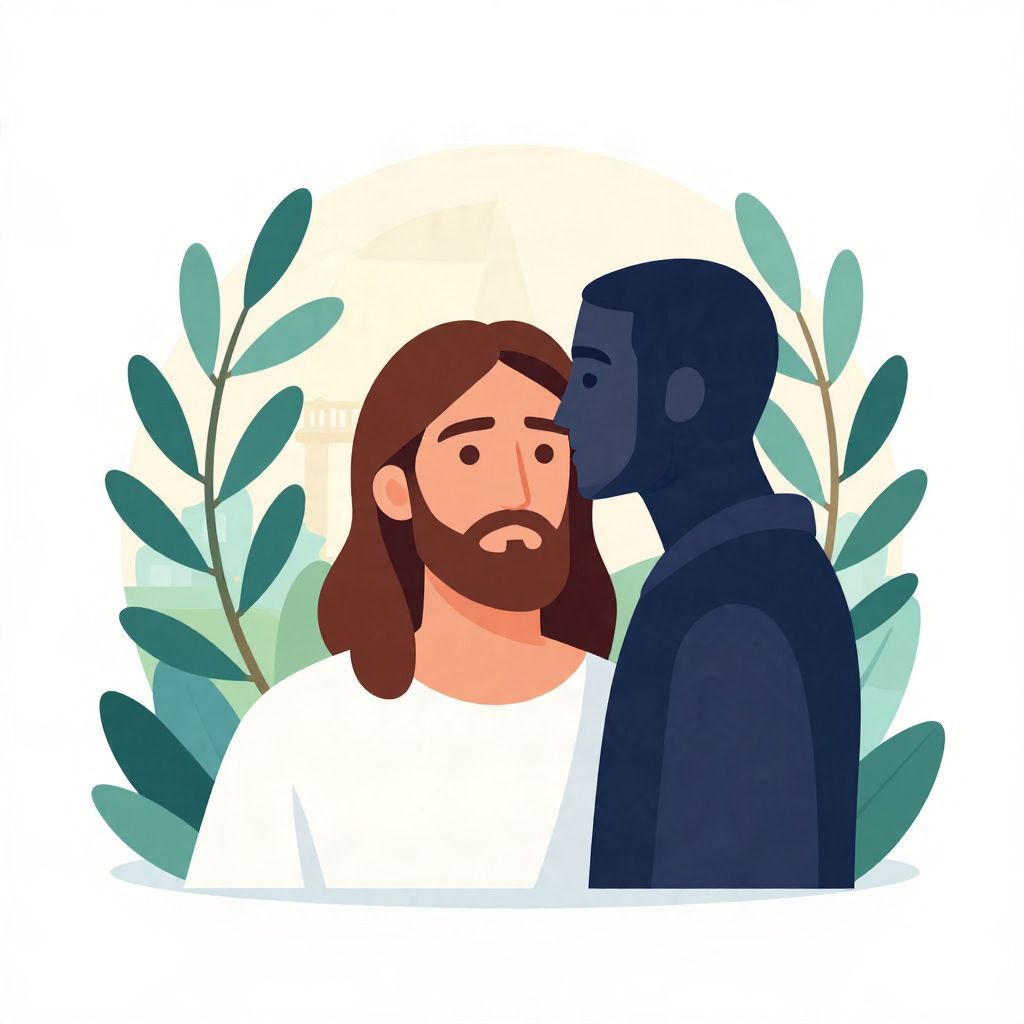
Have you ever wondered why Judas chose a kiss to betray Jesus? That moment still stings, not because it feels strange, but because it shows how close a person can stand to Jesus and still resist His heart.
Judas kissed Jesus to identify Him for arrest, but the kiss carried a deeper tragedy: he used a sign of affection as a tool of betrayal. Scripture shows a man who walked with Jesus, heard His teaching, and still chose greed, fear, and darkness over repentance. That matters because the same heart drift can still happen today.
Why Did Judas Kiss Jesus?
Judas kissed Jesus to mark Him out for the soldiers in the garden and to signal the arrest without confusion. In Matthew 26:48-49, Judas told the arresting crowd, “The one I kiss is the man; arrest him,” then stepped up and kissed Jesus. He used a greeting of friendship to deliver a betrayal.
A Sign of Closeness Turned into Treachery
In that culture, a kiss showed respect, affection, and peace. Judas took something meant for fellowship and turned it into a weapon, which makes the scene more painful than a simple act of identification.
He did not betray Jesus from far away. He betrayed Him up close, after sharing meals, prayers, and years of exposure to truth.
Jesus Knew What Judas Would Do
Jesus did not get trapped by Judas’ kiss. He knew the betrayal before it happened, and He still walked into the garden with full resolve to do the Father’s will, as the Gospels show in John 13:21-27 and Matthew 26:50.
That truth matters. Human evil never catches God off guard, and the cross never came as a mistake.
What Drove Judas to Betray Jesus?
Judas did not wake up one morning and suddenly become a traitor. Scripture shows a heart that grew cold through greed, deception, and refusal to turn back.
Greed Opened the Door
John 12:4-6 says Judas kept the money bag and stole from it, so greed already ruled parts of his life. The thirty pieces of silver in Matthew 26:14-16 did not create his corruption; they revealed it.
Sin often works that way. It does not begin with thunder and lightning; it starts with a small compromise that asks for a little room.
He Chose Darkness Over Repentance
Judas felt remorse after the betrayal, but remorse is not the same as repentance. Matthew 27:3-5 shows sorrow without surrender, grief without return, and despair without hope in God’s mercy.
That distinction matters for every reader. Have you ever felt sorry for sin but stopped short of confessing it to Christ?
Satan Used What Judas Would Not Surrender
Luke 22:3 says Satan entered Judas, yet Scripture never removes Judas’ responsibility. Evil gained access through a willing heart, not through a helpless victim.
That truth should sober every believer. A heart that refuses truth gives darkness room to work.
Why the Kiss Matters Spiritually
The kiss of Judas exposes the danger of outward religion without inward love for Christ. A person can look near to Jesus, speak religious words, and still resist His lordship.
Outward Signs Can Hide an Empty Heart
Judas stood among the Twelve, heard the Sermon on the Mount, watched miracles, and still betrayed the Lord. That should make every churchgoer pause, since proximity to holy things never saves anyone.
Matthew 7:21 warns that not everyone who says “Lord, Lord” enters the kingdom of heaven. Jesus wants obedience from the heart, not polished religious manners.
A Kiss Can Hide a Knife
The scene in Gethsemane shows how betrayal often arrives wrapped in friendliness. A smile can hide envy, and a religious phrase can hide rebellion.
That is not a reason for cynicism. It is a reason for honest self-examination before God.
What Judas Teaches About the Human Heart
Judas shows that a person can hear truth, handle holy things, and still love sin more than Christ. That warning reaches far beyond one man in one garden.
Closeness to Jesus Does Not Replace Surrender to Jesus
John 6:70-71 records Jesus saying that one of the Twelve was a devil, and He spoke of Judas. Jesus saw the heart beneath the role, the mask beneath the ministry, and the betrayal beneath the table fellowship.
That should lead to humility, not fear. The question is not, “Have I been around Christian things?” The question is, “Have I yielded to Christ?”
Unconfessed Sin Hardens the Soul
Judas did not fall in one moment. He walked a road of hidden theft, secret compromise, and growing resistance to Jesus until betrayal felt possible.
Sin loves secrecy. It asks for one more hidden step, then one more, until the heart feels farther from God than it ever planned to go.
What Jesus Reveals in the Face of Betrayal
Jesus met Judas with calm authority, not panic. In Matthew 26:50, He called him “friend,” which shows both truth and sorrow in the same sentence.
Jesus Did Not Lose Control
Christ did not stumble into the cross. He moved toward it in obedience, knowing betrayal, arrest, mockery, and death would follow.
That means the cross stands as God’s saving plan, not man’s accident. Human sin carried real guilt, and God still worked redemption through it.
Jesus Still Offers Mercy to Sinners
The tragedy of Judas grows sharper when set beside Peter’s failure. Peter denied Jesus and later wept bitterly, then returned to the Lord; Judas despaired and turned away.
That difference matters. Jesus meets repentant sinners with mercy, and He never turns away the one who comes honestly.
What the Kiss of Judas Means for You
The question “Why did Judas kiss Jesus?” reaches into every heart that claims to know Christ. It asks whether love for Jesus runs deep or whether religion only covers self-interest.
Ask Honest Questions Before God
Use these questions as a mirror before Scripture:
- Do I love Jesus, or do I only love the benefits I hope to get from Him?
- Have I hidden any sin that keeps growing in the dark?
- Do I repent when God convicts me, or do I excuse what He condemns?
- Do my words about Jesus match my choices before Him?
These questions can sting, yet they can heal. A clean wound hurts less than a hidden infection.
Choose Repentance Over Regret
Repentance means turning from sin to God with honesty and faith. Regret only feels bad about consequences, but repentance bows before Christ and asks for mercy.
If sin has grown quiet in your life, bring it into the light now. Jesus still receives sinners who stop pretending.
How to Respond to the Story of Judas
The story of Judas calls for more than sympathy or shock. It calls for repentance, vigilance, and deeper love for Christ.
Three Clear Responses
Take these steps seriously:
- Confess hidden sin to God without excuses, using 1 John 1:9 as your promise of cleansing.
- Guard your heart from greed, resentment, and secret compromise.
- Stay near Jesus through prayer, Scripture, and obedience, not mere religious habit.
These steps do not save anyone by themselves, yet they place a heart where grace can work. A soul that stays honest before God stays safer than one that performs well in public.
The Mercy Still Offered at the Cross
The kiss of Judas shows the worst of human betrayal, and the cross of Christ shows the best of divine mercy. Jesus went to the cross for betrayers, deniers, and sinners who cannot save themselves.
That is the hope for every reader. If Judas teaches anything, it teaches that proximity to Jesus never replaces repentance, and repentance never fails to meet His mercy.
Pray now for a clean heart and a truthful spirit. Ask God to expose hidden sin, strengthen your love for Christ, and keep you from the slow drift that ruined Judas.
If you want to keep growing in faith, read more about prayer for repentance and forgiveness and prayer for communion, where Scripture points the heart back to Christ with honesty and hope.